My $500 Homelab Mistake: When Enterprise Gear Just Doesn't Fit (for Monitoring!)
I dove headfirst into the world of cheap enterprise server gear for my homelab monitoring setup, thinking I'd found a steal. What I actually found was a noisy, power-hungry behemoth that taught me a valuable lesson about matching hardware to your real needs.
Hey fellow homelabbers!
You know that feeling, right? Scrolling through eBay, a little voice in your head whispers, "Enterprise gear is so cheap now! You could get so much power for so little!" Well, that little voice got me good, and it led to a $500 lesson in matching hardware to your actual use case, especially when it came to my monitoring stack.
The Dream: A Bulletproof Monitoring Behemoth
My homelab was growing. VMs, containers, network devices – I wanted to keep a close eye on everything. My existing monitoring setup (Prometheus, Grafana, Loki) was running on a modest NUC, but I had grand visions. I wanted more historical data, more dashboards, more metrics! I figured, if enterprise data centers use these beasts, they must be perfect for a robust, always-on monitoring solution.
My logic went something like this: "A used enterprise server will have redundant power supplies, ECC RAM, powerful CPUs, and be built like a tank. It'll handle all my metrics with ease and be super reliable!"
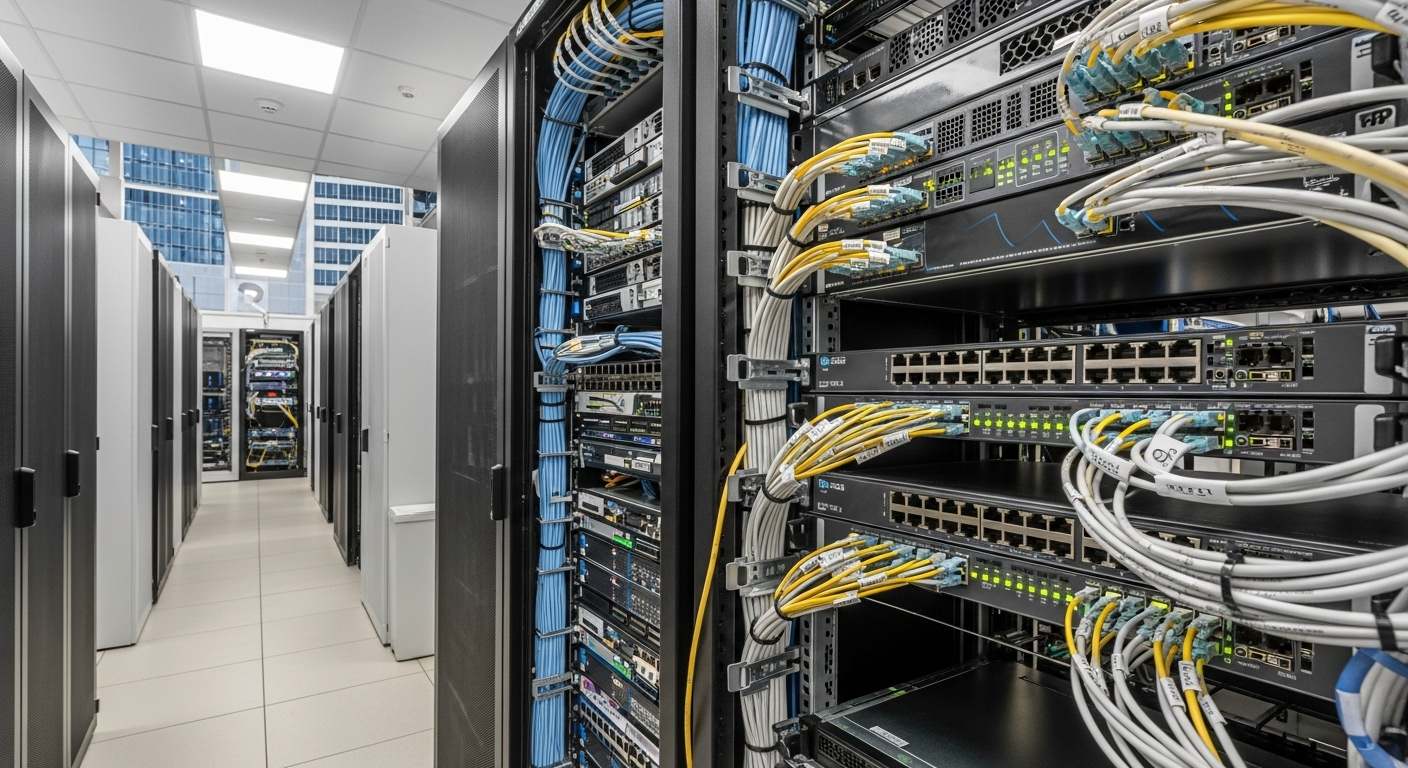
So, I pulled the trigger. For just under $500 (including shipping and a few extra drives), I landed a Dell PowerEdge R710 – a dual-socket beast with two Xeon X5670s, 72GB of ECC RAM, and a couple of redundant 870W power supplies. On paper, it was an absolute monster for the price. I pictured my Grafana dashboards flying, never missing a beat.
The Reality: Unboxing a Jet Engine
The server arrived, and the unboxing was exciting. It looked impressive, all rack-mountable and serious. But then I powered it on.
• The Noise: Oh. My. Goodness. The fans spun up with the ferocity of a jet engine preparing for takeoff. My office, which doubles as my homelab space, was instantly transformed into a server room. And it wasn't just during boot; it settled into a constant, noticeable hum that drowned out everything else. My partner was… not amused.
• The Power Bill: This was the real kicker. I hadn't properly considered the idle power consumption of a 10+ year old, dual-CPU, multi-drive server designed for a data center. Even at idle, it was pulling over 200W! My NUC, by comparison, sipped around 15-20W. Running this 24/7 for a few Prometheus instances and Grafana was going to cost me a fortune in electricity.
• Overkill, Much?: My monitoring stack, while important, wasn't exactly pushing the limits of modern hardware. Prometheus and Grafana, even with a few months of data, barely touched the resources of the R710. Those 12 physical cores and 72GB of RAM were sitting there, largely idle, generating heat and noise for no good reason.
• Physical Footprint: A 2U rackmount server is great if you have a rack. I had a shelf. It was heavy, bulky, and didn't really fit anywhere gracefully.
I tried to make it work. I tinkered with fan profiles (minimal impact). I tried to optimize the OS (didn't change the base power draw much). But every time I walked into my office, the constant drone and the thought of the escalating electricity bill gnawed at me.
The 'Aha!' Moment and Lessons Learned
After a couple of weeks of trying to justify my purchase, the truth hit me: this enterprise gear was fundamentally the wrong tool for my homelab monitoring job. It was designed for a different environment, with different priorities (raw performance, redundancy, and rack density over quiet operation and low power consumption).
Here's what I learned from my $500 mistake:
Evaluate Your *Actual* Needs: Don't get swayed by raw specs or cheap prices. What does your workload *really* require? For monitoring in a homelab, efficiency (low power, low noise) often trumps raw, always-on, data-center-level compute.Total Cost of Ownership (TCO) Matters: The purchase price is just one part of the equation. Factor in electricity costs, potential cooling needs, and even the physical space it occupies.Homelab vs. Data Center: These are two very different environments. What's optimal for one is often suboptimal for the other.Simplicity Can Be Golden: My humble NUC or even a mini-PC was more than capable of handling my monitoring needs, quietly and efficiently.
The Pivot: Back to Basics (and Quiet!)
I ended up selling the R710 (taking a bit of a loss, naturally). I reinvested that money into a newer, more power-efficient mini-PC with a modern low-power CPU, more NVMe storage for faster time-series database operations, and a small form factor. It sips power, is virtually silent, and handles my entire monitoring stack (Prometheus, Grafana, Loki, Alertmanager) with ease and plenty of headroom.
The dashboards are just as snappy, the data is just as reliable, and my ears (and electricity bill) are much happier. It was a costly lesson, but a valuable one. Sometimes, the "enterprise-grade" solution isn't the best solution for your cozy homelab. Keep it simple, keep it efficient, and your homelab (and your wallet) will thank you!
Happy homelabbing, and learn from my mistakes!